
A LED mirror cabinet sizing guide helps buyers match width, depth, and shelf configuration to actual storage needs rather than relying on outer dimensions alone. Key checks include internal depth versus overall casing size, recessed wall cavity clearance (typically 90-120mm for standard stud walls), and shelf count or adjustability, since electronics like LED drivers and defogger pads can reduce usable space by 15-25mm. Buyers should also verify hinge clearance and door configuration. This applies primarily to hotel, residential, and private-label bathroom vanity projects requiring accurate multi-SKU specification.
Most buyers assume a wider or taller LED mirror cabinet automatically means more usable storage. It doesn’t. Two cabinets with identical width and height can hold noticeably different amounts of product depending on depth, shelf spacing, and how much internal space the LED driver, defogger pad, or socket assembly takes up. Sizing this product correctly is less about the outer dimensions on a spec sheet and more about what’s left inside once the electronics are accounted for.
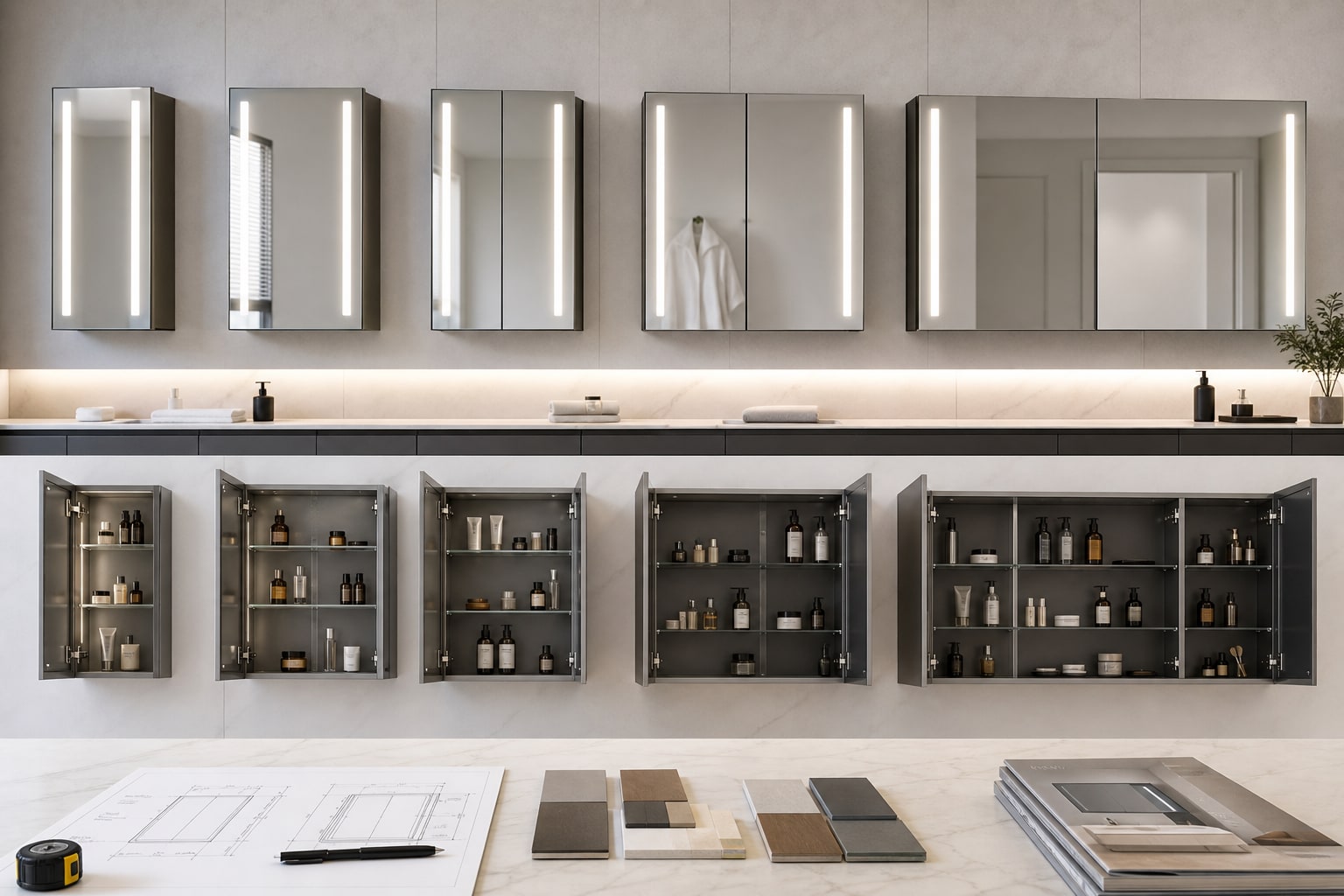
Cabinet Width Determines Frontage, Not Necessarily Storage Volume
Width sells the product on a showroom floor or in a catalog photo. It’s the dimension most buyers compare first, and for good reason — it has to match the vanity or wall space available.
But width tells you almost nothing about how much a customer can actually store. A 900mm-wide cabinet with shallow 100mm depth and two fixed shelves may hold less than a 700mm cabinet with 150mm depth and three adjustable shelves. If you’re specifying cabinets for a hotel chain or building out a private-label range, quoting width alone to a client and letting them assume storage scales with it is how you end up with post-installation complaints.
When you’re comparing supplier quotes, ask for internal depth and shelf count separately from the overall cabinet dimensions. Some suppliers list only the outer casing size, which looks impressive on a spec sheet but doesn’t reflect what fits inside once you subtract wall thickness for the housing and the LED strip channel.
Depth Is the Real Storage Constraint for Recessed Installations
Surface-mounted cabinets are relatively forgiving on depth — you can go up to 180mm or more without creating installation problems, since the unit simply sits in front of the wall. Recessed cabinets are a different story.
Recessed installation depends on the wall cavity. Standard stud walls typically offer 90-120mm of usable depth between the wallboard faces, sometimes less if there’s plumbing, insulation, or fire-rated backing behind it. If a cabinet’s casing depth is 150mm, it simply will not recess into most standard walls without cutting into structural framing or building a false wall — which changes the entire installation cost for a contractor or hotel renovation project.
This is where a lot of sizing mismatches happen on B2B orders. A distributor orders based on a nice-looking storage capacity spec, then finds out during a hotel refurbishment that the recessed depth won’t clear the existing cavity across half the rooms. Confirm wall cavity depth on the project side before locking in a recessed SKU, and treat surface-mount as the safer default when cavity depth is unknown or inconsistent across units.
Matching Cabinet Sizes to Project Type and Room Layout
Storage need isn’t a fixed number — it shifts depending on who’s using the bathroom and how often it turns over. A budget hotel room and a long-term residential apartment don’t need the same internal capacity, even if the wall space looks identical.
Hotel bathrooms generally prioritize a clean, minimal look over storage volume, since guests aren’t unpacking a full skincare routine. Residential and rental markets tend to expect more shelf space for daily toiletries. Retail resale (bathroom showrooms, home improvement chains) sits somewhere in between, and buyers there often want a range of sizes on one product line rather than a single fixed dimension.
| Width Range | Typical Depth | Common Application | Typical Shelf Count |
|---|---|---|---|
| 500-600mm | 100-120mm | Compact hotel rooms, single-sink powder rooms | 1-2 fixed |
| 700-800mm | 120-150mm | Standard hotel and residential single-sink | 2-3 adjustable |
| 900-1000mm | 150mm | Upgraded residential, boutique hotel suites | 3 adjustable |
| 1200mm+ | 150-180mm | Double-sink vanities, mid-to-high end residential | 3-4, often split doors |
These tiers aren’t fixed rules, but they reflect how most sourcing catalogs are structured. If a client project doesn’t fit neatly into one tier — say, a hotel with unusually narrow bathroom walls but a desire for double-shelf storage — that’s a sign to look at depth and shelf density adjustments rather than jumping to a wider cabinet that won’t physically fit the space.
Shelf Configuration Decisions That Change Usable Capacity
Two cabinets with the same outer size can differ significantly in how much they actually hold, based on shelf spacing and whether shelves are fixed or adjustable.
Fixed shelves are cheaper to manufacture and slightly more durable under load, but they lock the buyer into whatever spacing the factory chose. If shelf gaps are set for small skincare bottles, taller items like hairspray cans or electric razors won’t fit upright. Adjustable shelves cost a little more and add a small amount of hardware complexity, but they let end users reconfigure the space — which matters more in residential and retail resale than in hotel projects, where uniformity across rooms is usually preferred over flexibility.
Door configuration also affects capacity more than people expect. A single door cabinet loses some depth to the hinge swing radius, while double-door units split the internal space in half, which can actually reduce how large a single item you can store even though total volume is similar. If a project brief specifically mentions storing larger items — hairdryers, styling tools — check hinge clearance and internal partition width before confirming the SKU, not just the stated liters or shelf count.
Sizing a Multi-SKU Product Line for Distribution or Private Label
If you’re building a catalog rather than sourcing one mirror for one job, the sizing question changes. It’s no longer “how much storage does this project need” but “how many size variants does my line need to cover the market without overlapping SKUs that cannibalize each other.”
Most distributors do well with three to four width tiers and one or two depth options — trying to offer every possible combination usually leads to overlapping SKUs that confuse resellers and complicate inventory forecasting. A narrower range with clear storage differences between tiers (not just cosmetic size differences) tends to sell better to retail and project buyers who are comparing options side by side.
Before finalizing a size range for private-label production, it’s worth requesting sample units at the extremes of your planned range — smallest and largest — rather than only the middle tier. Extremes reveal manufacturing issues (warping on larger mirror panels, hinge strain on heavier doors) that a mid-size sample won’t show.
Sizing Mistakes That Create Installation and Return Problems
A few recurring sizing errors show up across hotel and residential projects, and most of them trace back to skipping the depth and cavity check in favor of matching width alone.
- Ordering recessed cabinets without confirming wall cavity depth on-site, leading to on-site modification costs.
- Assuming shelf count scales with width, when depth and shelf spacing matter more for actual capacity.
- Choosing a single SKU across a hotel project with mixed bathroom layouts, forcing installers to force-fit mismatched sizes.
- Overlooking that LED driver housing and anti-fog pad wiring reduce usable internal depth by 15-25mm in some designs.
- Selecting decorative door styles without checking whether hinge hardware reduces the internal shelf width more than expected.
None of these are dramatic failures on their own, but each one turns into a change order, a delayed installation, or a returned unit. On a bulk order, that cost multiplies fast.
Frequently Asked Questions
How do I know if a recessed LED mirror cabinet will actually fit my wall cavity?
Measure the usable depth between wallboard faces before selecting a recessed SKU. Standard stud walls typically offer 90-120mm of clearance, less where plumbing or fire-rated backing exists. If the cabinet’s casing depth exceeds that, it won’t recess without cutting into framing. When cavity depth varies across a project, surface-mount is the safer default rather than forcing one recessed spec everywhere.
Does a wider LED mirror cabinet always mean more storage space?
No, width mainly determines frontage and how the unit matches the vanity, not internal capacity. A 900mm cabinet with shallow 100mm depth and two fixed shelves can hold less than a 700mm unit with 150mm depth and three adjustable shelves. Always request internal depth and shelf count separately from outer casing dimensions when comparing supplier quotes.
What’s the difference between fixed and adjustable shelving for storage capacity?
Fixed shelves are cheaper and slightly more durable but lock buyers into factory-set spacing, which can block taller items like hairspray cans from fitting upright. Adjustable shelves cost a bit more and add minor hardware complexity, but let end users reconfigure space. Hotel projects usually favor fixed shelves for room-to-room uniformity, while residential and retail resale benefit more from adjustable configurations.
How many width and depth variants should a distributor stock for a private-label line?
Most distributors do well with three to four width tiers paired with one or two depth options. Wider ranges with every possible combination tend to create overlapping SKUs that confuse resellers and complicate inventory forecasting. Focus on tiers with genuinely different storage capacity rather than cosmetic size gaps, since that’s what project buyers compare side by side.
Why do two cabinets with the same outer dimensions hold different amounts of product?
Internal capacity depends on depth, shelf spacing, door configuration, and how much room the LED driver, defogger pad, or socket assembly occupies inside the casing. Double-door units split space in half, which can reduce the size of the largest item that fits even when total volume looks similar. Always check hinge clearance and internal partition width, not just stated liters or shelf count.
What should I check before ordering sample units for a new size range?
Request samples at the smallest and largest widths in your planned range, not just a mid-size unit, since extremes reveal manufacturing issues like warping on larger mirror panels or hinge strain on heavier doors. Also confirm that LED driver housing and anti-fog wiring haven’t reduced usable internal depth by the 15-25mm some designs lose to electronics.
STANHOM manufactures LED mirror cabinets across multiple width, depth, and shelf configurations for hotel, residential, and retail projects, with OEM and ODM support for distributors building their own product lines. All units are available with CE, RoHS, REACH, and IP-rated options depending on the installation environment.
If you’re finalizing a size range for a project or a private-label catalog, send us your dimensions and storage requirements and we’ll match them against our current production specs.


